
Existential Struggles During Times of War: An Art Therapist’s Lens

War does not only devastate cities and bodies—it fundamentally disrupts meaning, identity, and the felt sense of being human. Moreover, across cultures and generations, individuals exposed to war grapple not only with trauma symptoms such as fear, grief, and hypervigilance, but also with profound existential struggles.
In particular, these struggles include questions of purpose, morality, mortality, freedom, and belonging. Therefore, this article explores how existential concerns arise during times of war and how art therapy can serve as a vital container for meaning-making, bearing witness, and psychological survival.

The Existential Impact of War
Existential psychology emphasizes that human beings are meaning-seeking creatures. According to Viktor Frankl, the loss of meaning—rather than pain itself—is what makes suffering unbearable. Furthermore, war violently disrupts assumptive beliefs that the world is safe, orderly, and just.
As a result, people affected by war often confront deeply personal and distressing questions such as:
- Why am I alive when others are not?
- What kind of person am I in the face of violence?
- Is there meaning in survival, resistance, or witness?
Trauma as an Existential Rupture
Trauma, in this sense, is not only psychological injury but also an existential rupture. In other words, it disrupts an individual’s entire sense of meaning and identity.
However, words often fail in the context of war, particularly when language has been shaped by propaganda, censorship, or fear. Because of this, individuals may struggle to verbally process their experiences.

Therefore, art therapy offers an alternative pathway for expression—one rooted in sensory experience, metaphor, and symbol. Research shows that traumatic memory is frequently stored in nonverbal and sensory forms, making creative modalities especially suited for its processing.
Symbolism and Expression in War-Related Art
For art therapists, existential struggles often emerge symbolically, emotionally, and somatically through creative expression. In many cases, these experiences appear in art before they can be spoken.
For example, recurring themes in war-related art-making include:
- Fragmentation of the body or landscape
- Repetition of symbols such as blood, borders, shelters, and eyes
- Stark contrasts between life and destruction
- Collapsed or floating figures suggesting loss of identity
Isolation, Connection, and Shared Experience
One of the paradoxes of war is that suffering is collectively endured, yet deeply isolating. As a result, survivors often feel fundamentally unseen or unable to share their inner world with others who did not experience it the same way.
However, group art therapy in war-affected contexts has been shown to reduce isolation while still honoring individual experience. Moreover, shared creative spaces foster intersubjective empathy—a recognition of another’s inner life without erasing one’s own.
Importantly, art therapy does not force coherence or resolution. Instead, it allows multiple truths to coexist, including rage and hope, grief and endurance.
Moral Injury and Psychological Conflict
In many war contexts—particularly among soldiers, civilians coerced into survival decisions, and displaced persons—individuals experience moral injury. In other words, this refers to psychological and existential distress resulting from actions that violate deeply held moral beliefs.
Therefore, art therapy provides a space where moral complexity can be externalized and examined without immediate judgment. Additionally, visual expression allows contradictions to exist simultaneously.
Meaning-Making, Resilience, and Resistance
Frankl asserted that even in extreme conditions, humans retain the freedom to find meaning—whether through creativity, relationships, or the stance one takes toward suffering.

Consequently, in war contexts, art-making itself can become an act of resistance—a refusal to be reduced to victimhood or silence.
Furthermore, studies of art therapy with refugees and war survivors demonstrate that creative expression supports resilience, identity reconstruction, and future orientation.
Importantly, the goal is not to move beyond suffering but to live alongside it with dignity and meaning.
The Role of the Art Therapist
For art therapists working during times of war—whether directly or with diasporic populations—ethical presence is paramount.
The therapist does not interpret away suffering or rush toward hope. Instead, they bear witness, recognizing that to be seen in one’s pain is itself existentially reparative.
The Bottom Line
Ultimately, war exposes the fragility of human meaning while simultaneously revealing the profound human capacity to create, symbolize, and endure.
Existential struggles during wartime are not signs of pathology; rather, they are deeply human responses to inhuman conditions.
Art therapy offers a language for these struggles—one that honors complexity, restores agency, and affirms existence itself.
I am still here. My experience matters.
References
- Frankl, V. E. (1959). Man’s Search for Meaning.
- Herman, J. L. (1992). Trauma and Recovery.
- Huss, E., et al. (2010). Arts as a vehicle for community building.
- Janoff-Bulman, R. (1992). Shattered Assumptions.
- Kalmanowitz, D., & Ho, R. (2016). Art therapy with survivors.
- Litz, B. T., et al. (2009). Moral injury in war veterans.
- Malchiodi, C. A. (2020). Trauma and Expressive Arts Therapy.
- McNiff, S. (2004). Art Heals.
- van der Kolk, B. A. (2014). The Body Keeps the Score.
- Yalom, I. D. (1980). Existential Psychotherapy.
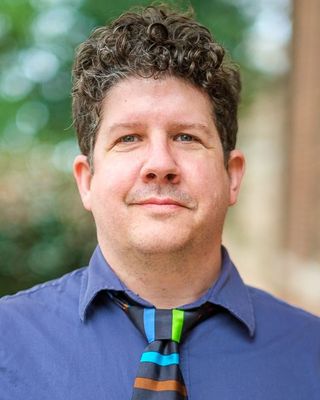
Andrew Elman
Hi — I'm Andrew Elman
Andrew Elman, LCMHC, ATR is a Licensed Clinical Mental Health Counselor and Registered Art Therapist with 20 years of experience across inpatient, oncology, eating disorder, college counseling, and outpatient settings. He blends expressive art-making with psychotherapy, specializing in adolescents, families, and DBT-informed, trauma-informed approaches.
Schedule a Consultation